
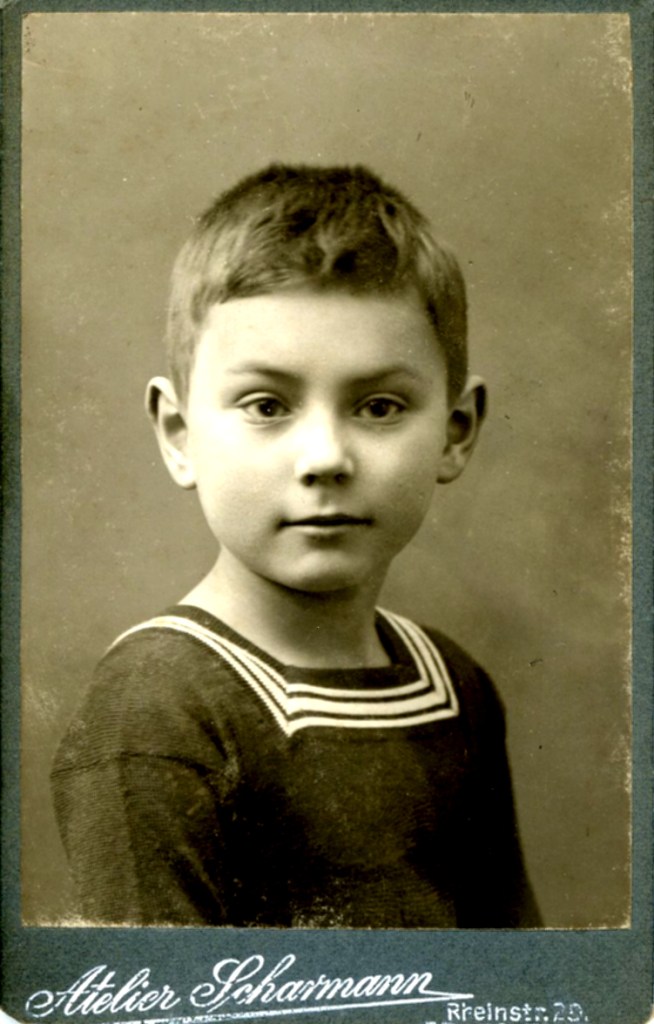
Werner Eugen Bollmann was born 3 Feb 1906 to Alfred Paul Bollmann (1884-1917) and Elisabeth Sophie Luitgard Albertine Castendyck (1876-1955) in the Spandau district of Berlin, Germany. Werner was the baby boy of the family with two older brothers: Friedrich Carl Wilhelm Julius Bollmann (1899-1947) and Eugen Alfred Paul Bollmann (1898-?).
Early Years
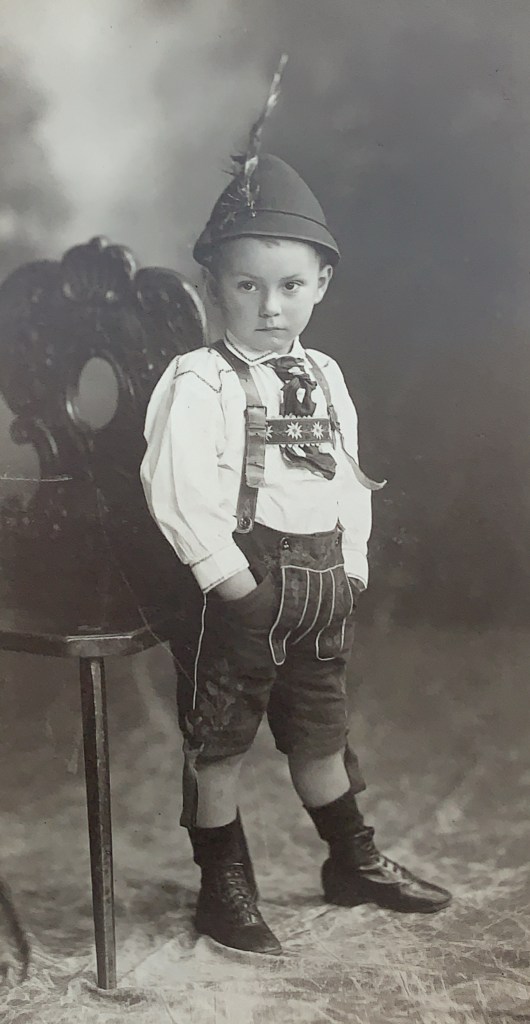
Werner’s father served in the German army and died of a stroke when Werner was only 11 years old, possibly a result of being wounded in World War I.
As a son of a military family, Werner attended the Prussian Military Academy. The Prussian military was disbanded as part of the Treaty of Versailles following WWI and Werner did not graduate from the academy or from another school, unlike his brothers.
According to family history, Werner was active in some paramilitary groups in the 1920’s and was hurt when a hand grenade exploded.
A New Family
Werner met Liselotte Johanna Theophilia Wedell (aka Lilo) during a ski vacation in the Alps in 1933. Both were on holiday, resulting from breakups of relationships. They quickly fell in love and decided to marry. However, the time period was early in the regime of the National Socialist party (Nazis). Werner was raised as a member of the Lutheran (Evangelische) faith, and Lilo was Jewish. Lilo’s father granted permission for the couple to marry, provided any children would be raised as Christians.
Due to the growing anti-Semitism of the time, neither a priest nor rabbi wanted to accept responsibility to officiate a wedding ceremony between a Christian and a Jew. As a result, Werner and Lilo were wed in a civil ceremony on 9 May 1934.
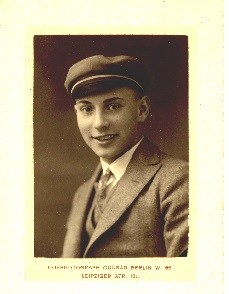
Their first child, Heinz Paul Ludwig Bollmann (later, aka Henry or Hank), was born prematurely on 28 Dec 1934 in Berlin, Germany. The family lived at Kaiserin-Augusta Strasse 31 in the Templehof district of Berlin, Germany.
Life During the War
Prior to WWII, the population of Berlin was 4.34 million, yet only 160,000 persons were members of the Jewish community. While this represented less than 4% of the population, Jews in Berlin were subject to the Nuremberg Laws governing racial classification. As the spouse of an Aryan, Lilo was identified as a “privileged Jew”. Support from Aryan Germans was critical to the Nazi regime, so privileged Jews were given some freedom in the 1940’s. (See Lilo’s story for more information on her family’s fate.)
Although anti-Semitic laws became more discriminatory throughout the 1930’s, the Bollmanns thought of themselves as Germans first, as evidenced by the fact that Werner volunteered for the German army in 1938. After enlistment but prior to being deployed, Werner became ill with scarlet fever. Upon being released from the military hospital, he was discharged from the army for being married to a Jew. Had he continued his military service, he would have been sent to France with his infantry unit, which was soon decimated in battle and only a few members survived.
During bombing raids of Berlin between 1942 and 1943, their apartment building was partially damaged. In an effort to claim relief for damages, Lilo was arrested for not having correct documentation as a Jew when she met with the Berlin authorities. During her time in prison, she gave birth to a set of twins, Goetz and Lutz, who were immediately taken from her and into Nazi custody. It is presumed the twins did not survive.
Due to fear from living in Berlin during the English air raids, Heinz was sent to Braunfels to live with Werner’s mother Elisabeth in 1943. As a “Mischlinge” or child with one Jewish parent, Heinz was taunted by his grandmother and her friends for being a “little Jewish boy.” Heinz soon returned to Berlin so the family “could die together” if circumstances should occur, but more likely because it was uncomfortable for him to be a Jewish boy in smaller, rural community.

Werner most likely faced strong discrimination for being married to a Jew. Although Lilo was considered a privileged Jew, their marriage put them in continued threat of arrest. In 1936, the Berlin State Labor Court had enacted legislation which permitted an “Aryan” spouse married to a Jew to be dismissed from his job. As mentioned earlier, Werner was not permitted to serve in the military because he was married to a Jew. These and other laws were intended to force divorce upon couples in mixed marriages, and which would then allow the government to deport the divorced spouse. By the fall of 1944, all “Aryan” spouses were removed from their jobs and sentenced to forced labor. According to family history, Werner was interred near an airport between Berlin and Hamburg in 1944 where the detainees were tasked with building shelters for the military. Werner and Lilo were able to communicate somewhat, and Lilo was able to send a coded message to him that a daughter, Rosemarie Elisabeth Alice (later aka Rosemary, Rosie, and Mady), was born on 24 Nov 1944.
Werner was given several liberties while interred and was able to travel to and from Berlin making deliveries and running errands for the military, often seeing the family for short periods of time during the trips. One day when Rosemarie was five months old, Werner escaped and did not return to the camp. He continued to live underground for a few weeks until it was safe to return home. When he did return home, he often hid in the attic when visitors were around. By May 1945, Germany had surrendered, and the Nazi regime was quickly becoming dismantled.
After the war, Werner returned to work for a large insurance company in Germany, possibly as an actuary. He also worked with his brother Fritz in forming a steel reclamation business, Isenverg Braunheim. The company reclaimed destroyed rail lines, which were resold after being welded back together. The company was located in the Russian territory of East Berlin, and much of the equipment was stolen by the Russians.
Together with friend August Pooks, Werner started a construction business, cleaning up war-torn areas of Berlin.
A New Life
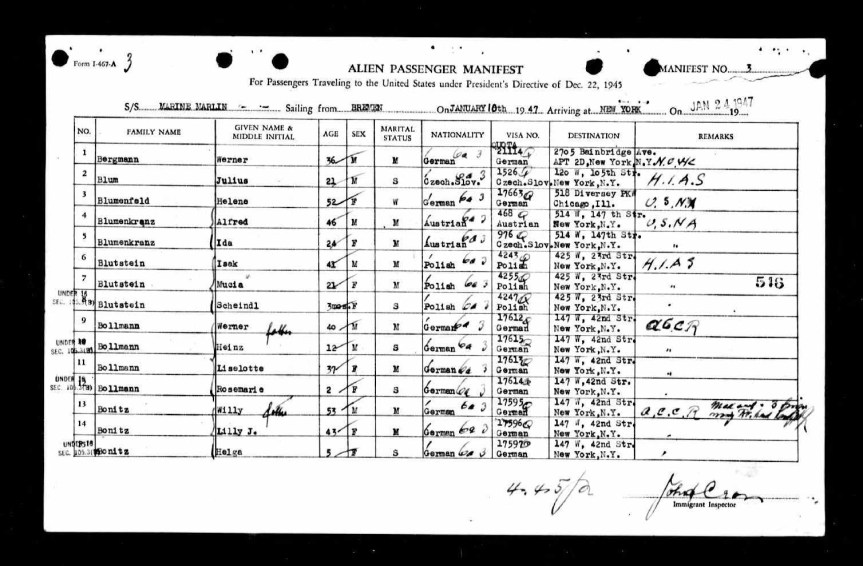
The American Joint Jewish Distribution Committee sponsored the family’s immigration to the United States. The family travelled to Bremen, where they stayed for a few days in a refugee camp sponsored by the Red Cross. On 10 Jan 1947, the Bollmann family departed from Bremen, Germany aboard the Marine Marlin, a ship which had been decommissioned after the war and functioned as a tourist class, carrying over 900 individuals. Lilo and Mady were able to stay in cabins, while Werner and Heinz bunked in the army quarters. Willy Bonitz, noted in the manifest below, was held in the labor camp with Werner. Despite terrible weather during their cross-Atlantic journey, the ship arrived safely in New York City on 24 Jan 1947. The Bollmanns had a few suitcases of personal belongings and $24 in American currency.
After spending a few days in New York City to visit friends and family, the Bollmanns moved to Cincinnati, Ohio, where they first lived in an immigrant boarding house administered by Goodwill. They later made their new home at 52 Prospect Place, Apt. 4 in an apartment above a pharmacy and candy store.
Immigrants were required to be gainfully employed in order to be eligible to live in the United States. Werner originally secured a position working for Western & Southern Insurance. However, at that time he was not certified to work in the United States and would have been paid $40 per week until his licensing was approved. To make more money and to provide for his family of four, Werner instead went to work for a gutter company and later applied to Fisher Body as a welder, using the work with his steel business as credentials. While welding was not one of his many skills, the company decided his abilities in mathematics would make him a better fit in the tool and die department. Werner spent the remainder of his career as a tool and die maker for Fisher Body.

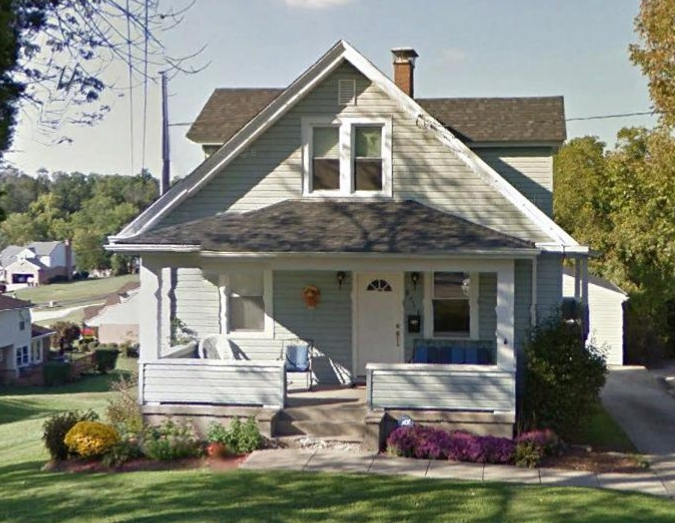
In 1949, the family moved to 6230 Berauer Road in Cincinnati.
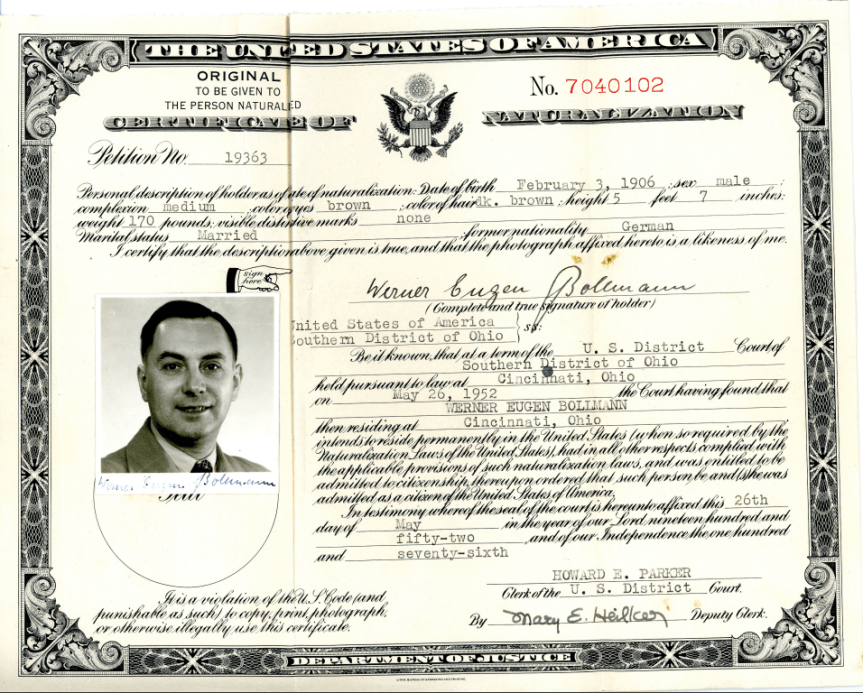
Werner and the family became naturalized citizens of the United States on 26 May 1952. Werner’s description is listed as having medium complexion, brown eyes, dark brown hair, and standing 5’7” tall and weighing 170 pounds.
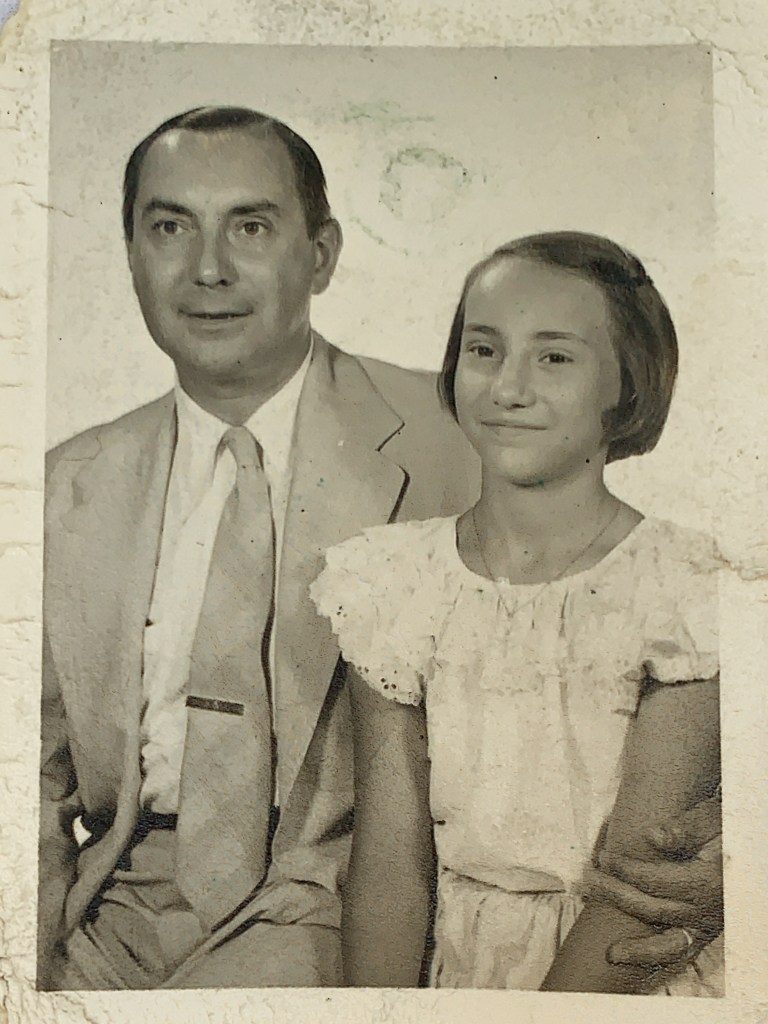
In 1955, Werner and Rosemarie (Mady) travelled to Germany to visit his mother for her 80th birthday (passport photo, shown at right). Mady had begged to meet her only grandmother, who was living in Braunfels, Germany at the time. They stayed for two weeks. As an adult, Rosemary remembers taking her grandmother an orchid corsage as a birthday present. Rosemary recalls a brief meeting between Werner and his brother Paul, which was a very cold reception. The brothers had distanced themselves from each other as a result of family alliances in World War II. Paul was a dedicated follower of the Nazi party, and Werner had married a Jew. Werner’s mother died later that year of pneumonia.
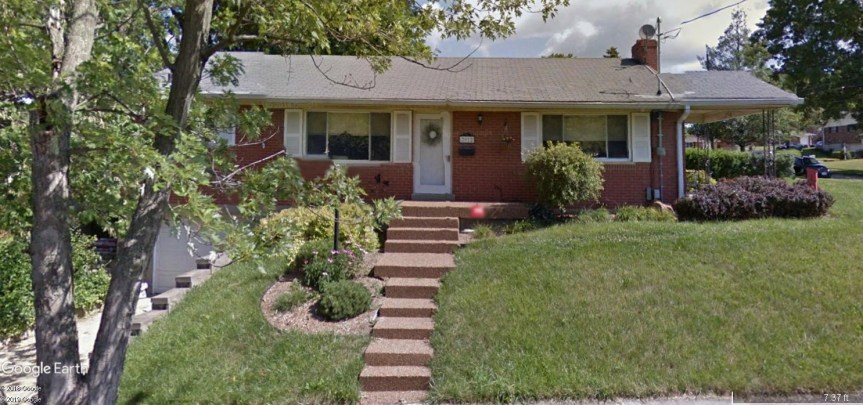
In 1958, the family moved to 5912 Fairhill Drive in Cincinnati, where they had built a new home.
Rosemary recalls her father as a kind soul, who was slow, if ever, to anger, a trait which must have provided balance with the stronger personality of Lilo. He displayed artistic abilities, being able to play the piano, violin and zither after years away from the instruments. While in Cincinnati, he joined the Westwood Chapter of the Society of Masons.
In early 1964, Werner suffered his first heart attack. While recuperating on disability leave, Werner began woodworking as a hobby.
Werner suffered a second heart attack while trimming hedges and died at home on 6 Sep 1966. He is buried in Spring Grove Cemetery.
Sources
Ancestry.com. U.S. City Directories, 1822-1995 (database online). 1948.
Ancestry.com and Ohio Department of Health, Ohio, Death Records, 1908-1932,1938-2007 (database online). Provo, UT, USA: Ancestry.com Operations Inc., 2010. Accessed 21 Jun 2019.
Ancestry.com. U.S. Social Security Death Index, 1935-2014 (database online). Provo, UT, USA: Ancestry.com Operations Inc., 2014. Accessed 21 Jun 2019.
Berlin, Deutschland, “Laufendenummer: 2396,”; digital image, “Berlin, Germany, Births, 1874-1906,” Ancestry.com (www.ancestry.com; 22 Jul 2019). Recorded date: 23 Jun 2019.
Berlin Jewish, http://www.berlinjewish.com/jewish-community, accessed 12 Aug 2019.
Certificate of Naturalization, family collection.
Family history, as told by Henry Bollmann.
Family history, as told by Rosemary Church.
German Phone Directories, 1915-1981, 293; digital images, Ancestry.com (www.ancestry.com: accessed 4 Jul 2019). Recorded date 4 July 2019.
Holocaust Research Project, http://www.holocaustresearchproject.org/nazioccupation/berlin.html, accessed 12 Aug 2019.
“Rhineland, Prussia, Lutheran Baptisms, Marriages, and Burials, 1533-1950,” Ancestry.com (www.ancestry.com; 21 Jul 2019). Recorded date: 21 Jul 2019).
Spring Grove Cemetery www.springgrove.org. Accessed 12 October 2012.
Times of Israel, https://blogs.timesofisrael.com/privileged-jews-did-the-nazis-care-so-much/?, accessed 12 Aug 2019.
 The Budding Genealogist